
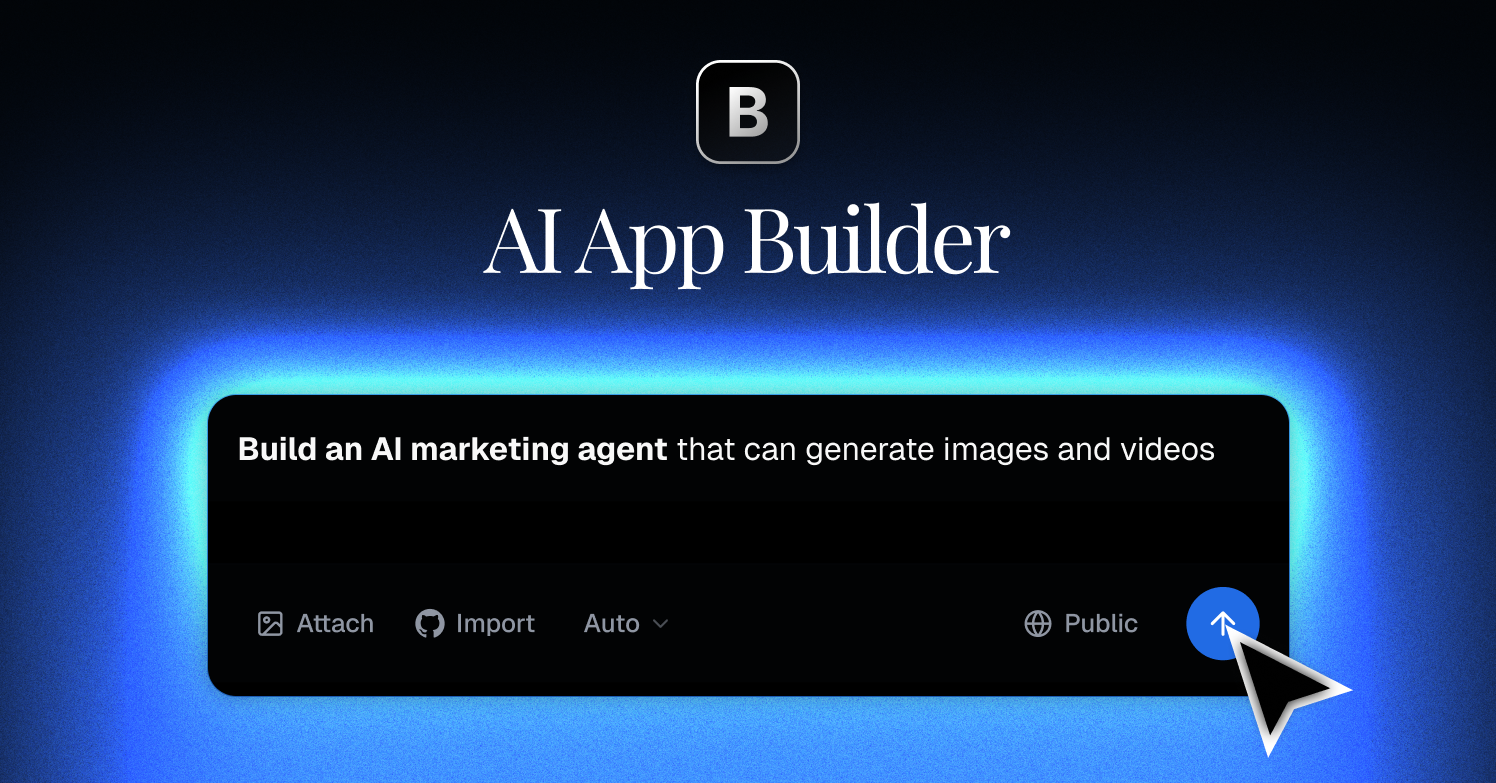

Blink.new
Blink.new helps non-technical founders build and deploy simple web apps and SaaS MVPs with auth, database, and hosting built in.
Type
AI-powered no-code web app builder
Pricing
Freemium
Category
AI Mobile DevelopmentWebsite
Blink.newMVPable Score
Fast path from idea to live product for non-coders, but you'll hit walls on anything complex
Reviewed by MVPable · Updated
Who Should Use Blink.new
Use Blink.new if
- Non-technical solo founders who need a live, working MVP in a weekend
- Founders validating a simple SaaS idea with auth and basic data storage
- Marketers or operators building internal tools or landing pages with dynamic features
- Anyone who wants hosting, CDN, and custom domains without touching infrastructure
Avoid Blink.new if
- Founders building complex multi-role SaaS with custom backend logic or workflows
- Teams that need native mobile apps (iOS/Android) — this produces mobile-adaptive websites, not app store apps
- Technical founders who want code ownership and the ability to deeply customize or extend
- Products requiring third-party API integrations beyond basic auth and database
Real use cases
Waitlist + early SaaS MVP
Build a landing page with email capture, user auth, and a basic dashboard to validate whether people will sign up and engage. Deploy it on a custom domain with SSL in one sitting.
Simple directory or marketplace
Create a listings site where users can sign up, submit entries, and browse a database-backed catalog. Think a niche job board or local service directory.
Internal tool for a small team
Build a lightweight CRUD app for tracking inventory, leads, or tasks — with login so only your team can access it. No need for a full backend setup.
Content-driven micro-SaaS
Spin up a gated content platform or simple subscription site where users authenticate, access content, and you collect usage data. Good for testing willingness to pay.
Blink.new Review: What You Need to Know
What Blink.new Actually Does
Blink.new is an AI-powered builder that sits squarely in the "describe it and ship it" category. You tell it what you want, and it generates a working web application — complete with authentication, a database layer, and hosting. It produces mobile-adaptive output by default, which means your app looks decent on phones without you touching CSS breakpoints.
The built-in hosting includes CDN and auto-scaling, plus custom domain support. For a non-technical founder, this is genuinely valuable — you skip the entire DevOps headache of deploying, configuring SSL, and setting up infrastructure.
Where It Excels
The speed-to-live-product ratio is the main draw. If you're a non-coder who wants to go from "I have an idea" to "here's the URL, try it" in a day or two, Blink.new delivers on that promise for straightforward use cases. Auth and database come bundled, so you're not duct-taping Supabase to a frontend builder and hoping the auth flow doesn't break.
For simple SaaS — think a tool with login, a dashboard, and some stored data — it handles the basics well. The hosting story is clean: custom domains, CDN, auto-scaling. You don't have to think about Vercel vs. Netlify vs. Railway.
Where It Falls Short
The ceiling hits fast. If your MVP needs anything beyond basic CRUD operations — custom API integrations, complex business logic, role-based access control, payment processing with edge cases — you're going to feel the constraints. This is a pattern with all AI builders in this tier: the first 80% feels magical, and the last 20% feels impossible.
Because it's designed for no-coders, you're largely working within whatever abstractions Blink.new provides. There's limited evidence of robust code export, which means if your MVP takes off and you need to hand it to a dev team, you may be rebuilding rather than refactoring. That's fine if you know it going in — it's a problem if you don't.
The "mobile adaptive" claim deserves a reality check: these are responsive websites, not native apps. If your users expect an app store presence or native device features (push notifications, camera access, offline mode), this isn't your tool.
Honest Take
Blink.new occupies a useful niche: it's faster than Bubble for simple apps, more opinionated than Lovable or Bolt (which can be a feature if you don't want choices), and it bundles hosting so you don't juggle services. For validation — getting something live, in front of users, collecting real feedback — it's a solid pick. Just go in knowing this is a validation vehicle, not your production stack. If the idea works, budget for a rebuild.
What most reviews don't mention
Limited or no code export — if your MVP succeeds, expect to rebuild from scratch with a dev team rather than iterate on the generated codebase
Mobile-adaptive is not mobile-native: you won't get push notifications, app store distribution, or offline functionality
Complex backend logic (multi-step workflows, cron jobs, third-party API orchestration) likely isn't supported — you're limited to what the AI can scaffold
Freemium tier restrictions are unclear — custom domains and scaling features may require paid plans, and pricing transparency is limited
Auto-scaling sounds great until you need to understand what's actually happening under the hood — debugging performance issues on an abstracted platform is harder than on infrastructure you control
MVPability Score
Blink.new vs Alternatives
Market positioning
Blink.new sits between simple landing page builders and full no-code platforms like Bubble — it's faster and more opinionated, with built-in hosting that removes deployment friction.
vs. Alternatives
Compared to a0.dev, which focuses on generating React Native components for actual mobile apps, Blink.new is web-only but offers a more complete deployment story. Claude Code and SteerCode give you real code you own and can extend, but require technical skill to deploy and maintain — Blink.new trades that control for speed and simplicity. If you're a coder, Claude Code is strictly better; if you're not, Blink.new gets you live faster than anything that requires you to touch a terminal.



How we'd use it in a real MVP workflow
A serious team would use Blink.new as a throwaway validation tool: build the MVP in a day, put it in front of 50 target users, and measure engagement. If the idea has legs, take the validated UX patterns and user feedback to a developer who rebuilds it properly — likely with a framework like Next.js and a backend like Supabase. Don't plan to scale what Blink.new generates; plan to learn from it.
Key trade-off
Blink.new optimizes for speed-to-live over everything else. You'll ship fast, but you're trading code ownership, backend flexibility, and long-term scalability to get there. That's the right trade for validation — just make sure you know you're making it.
Frequently asked questions
Can I build a real mobile app with Blink.new?
No. Blink.new produces mobile-adaptive websites — they look good on phones but they're not native apps. You can't submit to the App Store or Google Play, and you won't get native features like push notifications or offline mode.
Can I export my code and move to another platform?
There's no clear evidence of full code export. Treat what you build here as a prototype — if it validates your idea, plan for a rebuild on a stack you own. This is the biggest decision factor for most founders.
How does the auth and database actually work?
Blink.new bundles auth and database as part of its platform — you don't configure them separately. This is fast for getting started but means you're dependent on their implementation. You likely can't swap in your own auth provider or connect to an external database.
Is Blink.new free to use?
It's freemium, so you can start without paying. But expect limitations on the free tier — custom domains, scaling features, and possibly database limits are likely gated behind paid plans. Check their current pricing before committing to a launch timeline.
Would an investor take my MVP seriously if it's built on Blink.new?
A smart investor cares about traction, not your stack — at the pre-seed stage. But if a technical co-founder or CTO candidate looks under the hood, they'll see a no-code generated app and expect a rebuild. That's fine for validation, but don't pitch it as your long-term architecture.
Ready to see how Blink.new fits in your MVP stack?